

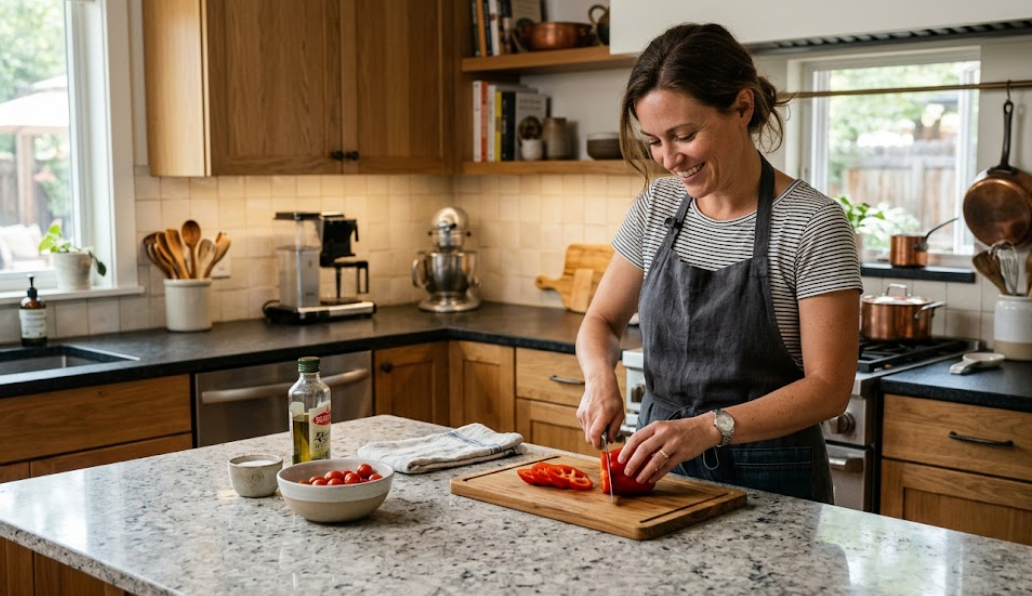
Kitchen countertops define both the function and appearance of a kitchen space. The right material improves durability, maintenance ease, and long term value. Homeowners often struggle with choosing between style, strength, and cost. This guide explains the best countertop materials and how each option performs in real kitchen environments.
Best Materials For Durable Kitchen Countertops
The best materials for durable kitchen countertops include quartz, granite, stainless steel, solid surface, and porcelain. Quartz offers consistent strength and low maintenance. Granite provides natural hardness and heat resistance. Stainless steel delivers industrial durability. Solid surface gives repairable seamless design. Porcelain provides strong resistance to scratches and stains.
Quartz and granite are top choices for long term durability. Stainless steel is ideal for professional style kitchens. Solid surface works for seamless modern designs. Porcelain is suitable for heavy use kitchens needing scratch resistance. The correct choice depends on budget, usage level, and design preference.
Quartz Countertops Benefits and Durability
Quartz countertops are engineered stone surfaces made from natural quartz crystals and resin binders. Quartz offers high resistance to stains and scratches. Quartz does not require sealing like natural stone.
Quartz countertops perform well in busy kitchens. Quartz resists moisture penetration and reduces bacterial growth risk. Quartz surfaces remain consistent in color and pattern.
Quartz is available in many styles. Quartz can mimic marble or granite appearance. Quartz provides predictable durability and easy maintenance for daily cooking environments.
Granite Countertops Natural Strength
Granite countertops are natural stone surfaces formed from cooled magma. Granite provides strong heat resistance and scratch resistance. Granite is known for its unique natural patterns.
Granite requires sealing to maintain stain resistance. Proper sealing protects granite from oil and liquid absorption. Granite remains one of the hardest natural materials used in kitchens.
Granite works well for high heat cooking environments. Granite can handle direct contact with hot cookware. Granite adds long term value to kitchen design due to its natural origin and strength.
Marble Countertops Elegance and Limits
Marble countertops are natural stone surfaces known for luxury appearance. Marble provides smooth texture and bright veining patterns. Marble enhances kitchen aesthetics significantly.
Marble is softer than granite and quartz. Marble is more prone to scratches and stains. Acidic substances can damage marble surfaces easily.
Marble requires regular sealing and careful maintenance. Marble is suitable for low activity kitchens or decorative cooking spaces. Marble remains popular for premium kitchen designs despite its maintenance needs.
Solid Surface Countertops Seamless Design
Solid surface countertops are man made materials composed of acrylic and polyester blends. Solid surface provides a smooth and seamless appearance. Solid surface can be shaped into custom designs.
Solid surface countertops are repairable. Minor scratches can be sanded and restored. Solid surface resists moisture and stains in normal kitchen use.
Solid surface is available in many colors and patterns. Solid surface works well for modern kitchens requiring integrated sinks and continuous surfaces. Solid surface offers balanced durability and design flexibility.
Laminate Countertops Budget Option
Laminate countertops are made from layered plastic materials bonded to particle board. Laminate offers affordability and wide design variety. Laminate can mimic wood, stone, or solid colors.
Laminate is less resistant to heat and scratches. Laminate can be damaged by sharp tools and hot pans. Laminate requires careful use to extend lifespan.
Laminate works well for budget kitchens and rental properties. Laminate is easy to install and replace. Laminate provides visual variety at low cost but lower durability compared to stone surfaces.
Butcher Block Warmth Wood Care
Butcher block countertops are made from glued hardwood strips. Butcher block provides a warm and natural kitchen appearance. Butcher block is popular in traditional and farmhouse designs.
Butcher block requires regular oiling to prevent drying and cracking. Butcher block can absorb moisture if not maintained properly. Knife marks are common on wooden surfaces.
Butcher block can be sanded and refinished easily. Butcher block works well for food preparation areas. Butcher block adds natural texture but needs consistent maintenance for durability.
Stainless Steel Modern Kitchen Use
Stainless steel countertops are metal surfaces commonly used in professional kitchens. Stainless steel provides strong heat resistance and hygiene benefits. Stainless steel is non porous and easy to clean.
Stainless steel shows scratches over time. Stainless steel can produce visible fingerprints. Stainless steel reflects light and creates a modern appearance.
Stainless steel works best in industrial style kitchens. Stainless steel supports heavy cooking use and frequent cleaning. Stainless steel remains one of the most hygienic countertop materials available.
Porcelain Slab Countertops High Performance
Porcelain slab countertops are made from refined clay and minerals fired at high temperatures. Porcelain provides strong resistance to heat, stains, and scratches. Porcelain is lightweight compared to natural stone.
Porcelain does not absorb liquids easily. Porcelain maintains color stability under sunlight exposure. Porcelain is suitable for indoor and outdoor kitchens.
Porcelain slabs come in large formats with minimal seams. Porcelain can replicate marble or concrete appearance. Porcelain offers modern durability with low maintenance requirements.
How to Choose Right Material
Choosing the right countertop material depends on kitchen usage patterns. High cooking frequency requires strong and heat resistant materials like quartz or granite. Light cooking kitchens can use marble or solid surface options.
Budget plays an important role in selection. Laminate offers low cost solutions. Quartz and granite provide mid to high range investment value. Porcelain supports premium durability needs.
Maintenance preference also matters. Quartz and stainless steel require low maintenance. Marble and wood require regular care. Durability expectations should guide final selection.
Maintenance Tips for Kitchen Countertops
Regular cleaning improves countertop lifespan. Mild soap and water work for most materials. Harsh chemicals can damage surface finishes over time.
Sealing natural stone protects against stains. Granite and marble benefit from periodic sealing. Proper sealing prevents liquid absorption and discoloration.
Heat protection preserves surface integrity. Hot pans should not be placed directly on countertops. Trivets and heat pads reduce damage risk.
Cutting boards protect surfaces from scratches. Direct cutting can damage softer materials like wood and laminate. Proper kitchen habits extend countertop durability.
What is the most durable kitchen countertop material
Quartz and granite are the most durable options due to their high resistance to scratches, stains, and heat.
Which countertop material is easiest to maintain
Quartz is easiest to maintain because it does not require sealing and resists most stains.
Are laminate countertops suitable for long term use
Laminate countertops are suitable for short to medium term use in low budget kitchens with light cooking activity.
Can marble countertops be used in busy kitchens
Marble countertops are not ideal for busy kitchens because they require high maintenance and stain easily.
Is stainless steel a good choice for home kitchens
Stainless steel is a strong option for modern kitchens that prioritize hygiene and heat resistance.
Conclusion
Kitchen countertop selection directly affects daily cooking experience and long term kitchen value. Each material offers specific benefits based on strength, maintenance, and cost. Quartz, granite, and porcelain provide strong durability. Wood and laminate provide design flexibility. The right choice depends on practical needs and kitchen usage patterns.


