

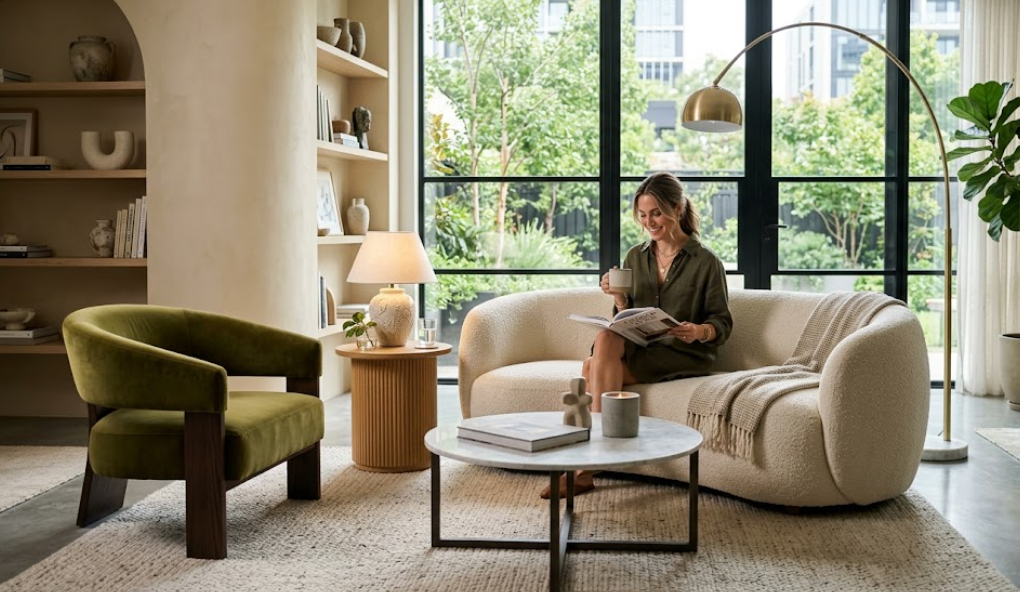
Curved furniture is shaping modern living rooms with soft lines and fluid forms. Straight edges feel rigid, but curves create comfort and visual flow. This guide explains how to use curved furniture effectively. You will learn layout strategies, styling methods, and practical ideas that improve both function and design.
Curved Furniture Ideas For Modern Living Rooms
Curved furniture improves flow, comfort, and visual balance in modern living rooms. Use curved sofas, rounded chairs, and circular tables to break sharp lines. Place these pieces to guide movement and soften the space. Start with one focal curved piece and build around it.
Follow these steps to solve layout and styling challenges:
- Place a curved sofa at the center to anchor the room.
- Use a round coffee table to maintain consistent geometry.
- Add accent chairs with soft edges to support seating balance.
- Keep pathways clear with at least 30 to 36 inches of walking space.
- Pair curves with neutral tones to avoid visual overload.
This approach creates harmony and improves usability in small and large living rooms.
Why Curved Furniture Works In Modern Interiors
Curved furniture improves spatial perception and emotional comfort. Straight lines create rigid boundaries, but curves promote natural movement. This design principle aligns with modern interior trends that focus on fluidity.
Key benefits include:
- Better traffic flow across the room
- Reduced visual tension
- Improved seating ergonomics
- Enhanced focal point creation
Curved forms also reflect organic design patterns found in nature. This effect supports relaxation and visual appeal.
Types Of Curved Furniture For Living Rooms
Different curved furniture pieces serve specific functions. Each piece contributes to the overall layout and design.
Curved Sofas
Curved sofas act as the primary seating element. These sofas range from semi-circular to fully rounded shapes. Standard sizes vary between 84 inches and 120 inches in width.
Best uses include:
- Open concept living rooms
- Conversation-focused layouts
- Center placement designs
Rounded Armchairs
Rounded armchairs support comfort and flexibility. These chairs often include barrel shapes or soft oval frames.
Advantages include:
- Easy repositioning
- Space-efficient seating
- Visual softness
Circular Coffee Tables
Circular coffee tables maintain flow and prevent sharp edges. Typical diameters range from 30 inches to 48 inches.
Benefits include:
- Safer movement in tight spaces
- Balanced center alignment
- Consistent design language
Curved Sectionals
Curved sectionals provide extended seating capacity. These pieces often include modular components for flexibility.
Use cases include:
- Large families
- Entertainment-focused rooms
- Open layouts
Best Layout Ideas Using Curved Furniture
Layout planning determines the effectiveness of curved furniture. Poor placement reduces function and visual clarity.
Centralized Layout
A centralized layout places a curved sofa in the middle. This arrangement works best in large living rooms.
Key elements include:
- Circular rug under the sofa
- Round coffee table at the center
- Accent chairs facing inward
Corner Softening Layout
A corner layout uses curved furniture to soften sharp room edges. Place a curved sectional in the corner to reduce rigidity.
Benefits include:
- Improved corner utilization
- Better seating distribution
- Reduced visual harshness
Open Flow Layout
An open flow layout removes strict boundaries. Curved furniture guides movement across zones.
Steps include:
- Position curved seating between zones
- Use rugs to define areas
- Maintain clear walking paths
Material Choices For Curved Furniture
Material selection affects durability, comfort, and style. Choose materials based on usage and climate.
Fabric Upholstery
Fabric offers comfort and versatility. Common options include cotton, linen, and polyester blends.
Advantages include:
- Breathability
- Wide color options
- Affordable pricing
Velvet Finishes
Velvet adds luxury and texture. It works well in modern and contemporary interiors.
Key features include:
- Soft surface feel
- Light reflection properties
- Rich color depth
Leather Options
Leather provides durability and a premium look. Genuine leather lasts between 10 and 20 years with proper care.
Benefits include:
- Easy maintenance
- Long lifespan
- Timeless appeal
Color Strategies For Curved Furniture
Color selection impacts the visual weight of curved furniture. Use balanced tones to maintain harmony.
Neutral Color Palettes
Neutral colors include beige, gray, and white. These tones reduce visual clutter.
Best practices include:
- Pair with wood textures
- Use layered textiles
- Add subtle contrast
Bold Accent Colors
Bold colors create focal points. Examples include deep blue, emerald green, and burnt orange.
Use these methods:
- Limit bold pieces to one or two items
- Balance with neutral surroundings
- Match with decor accents
Monochromatic Schemes
Monochromatic schemes use variations of a single color. This method enhances cohesion.
Steps include:
- Select a base color
- Use lighter and darker shades
- Maintain consistent undertones
Styling Tips For Curved Living Room Furniture
Styling ensures that curved furniture integrates with the overall design.
Use Layered Textures
Layered textures add depth. Combine soft fabrics, rugs, and cushions.
Examples include:
- Wool rugs with velvet sofas
- Linen curtains with fabric chairs
Add Organic Decor Elements
Organic decor supports curved shapes. Use plants, ceramics, and natural wood.
Benefits include:
- Enhanced visual softness
- Improved air quality with plants
- Balanced aesthetics
Maintain Visual Balance
Balance prevents overcrowding. Combine curved and straight elements carefully.
Guidelines include:
- Avoid too many curved pieces
- Mix with linear shelving or lighting
- Keep proportions consistent
Common Mistakes To Avoid
Mistakes reduce the effectiveness of curved furniture.
Avoid these errors:
- Overfilling the space with large curved pieces
- Ignoring walking space requirements
- Mixing too many contrasting styles
- Using oversized furniture in small rooms
- Placing curved furniture against all walls
Correcting these issues improves both function and design clarity.
Small Living Room Solutions With Curved Furniture
Curved furniture works in small spaces when used strategically.
Effective solutions include:
- Use a compact curved loveseat between 60 and 72 inches
- Choose round nesting tables instead of large coffee tables
- Add a single curved chair for accent seating
- Use light colors to create openness
These techniques maximize space without compromising style.
Lighting Ideas For Curved Living Rooms
Lighting enhances curved forms and highlights design features.
Best options include:
- Arc floor lamps to match curved lines
- Pendant lights with round shapes
- Soft ambient lighting for depth
Place lighting sources to highlight curves and avoid harsh shadows.
F.A.Q
Is curved furniture suitable for minimalist living rooms
Curved furniture fits minimalist spaces when used in limited quantities with neutral colors.
Does curved furniture cost more than regular furniture
Curved furniture typically costs 10 to 30 percent more due to complex manufacturing.
Can curved sofas work in rectangular rooms
Curved sofas work in rectangular rooms when placed centrally with balanced spacing.
Are curved furniture pieces harder to maintain
Curved furniture requires standard maintenance depending on material type and usage.
What rug shape works best with curved furniture
Round or oval rugs complement curved furniture and improve layout consistency.
Conclusion
Curved furniture transforms modern living rooms by improving flow, comfort, and visual harmony. Strategic placement ensures functionality. Balanced materials and colors enhance appeal. Controlled use prevents clutter. Curved furniture supports both aesthetics and usability when applied with clear design planning and structured layout decisions.


